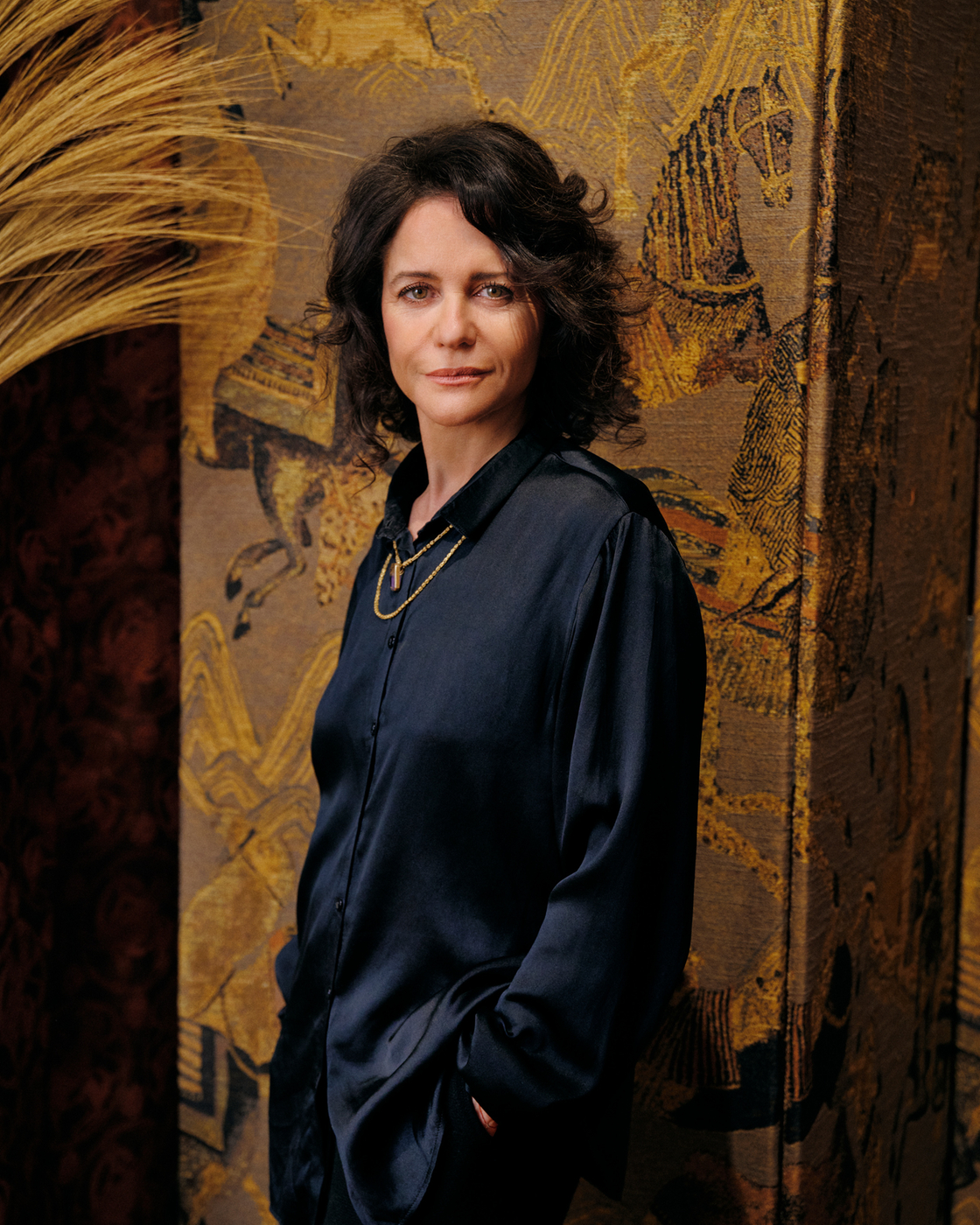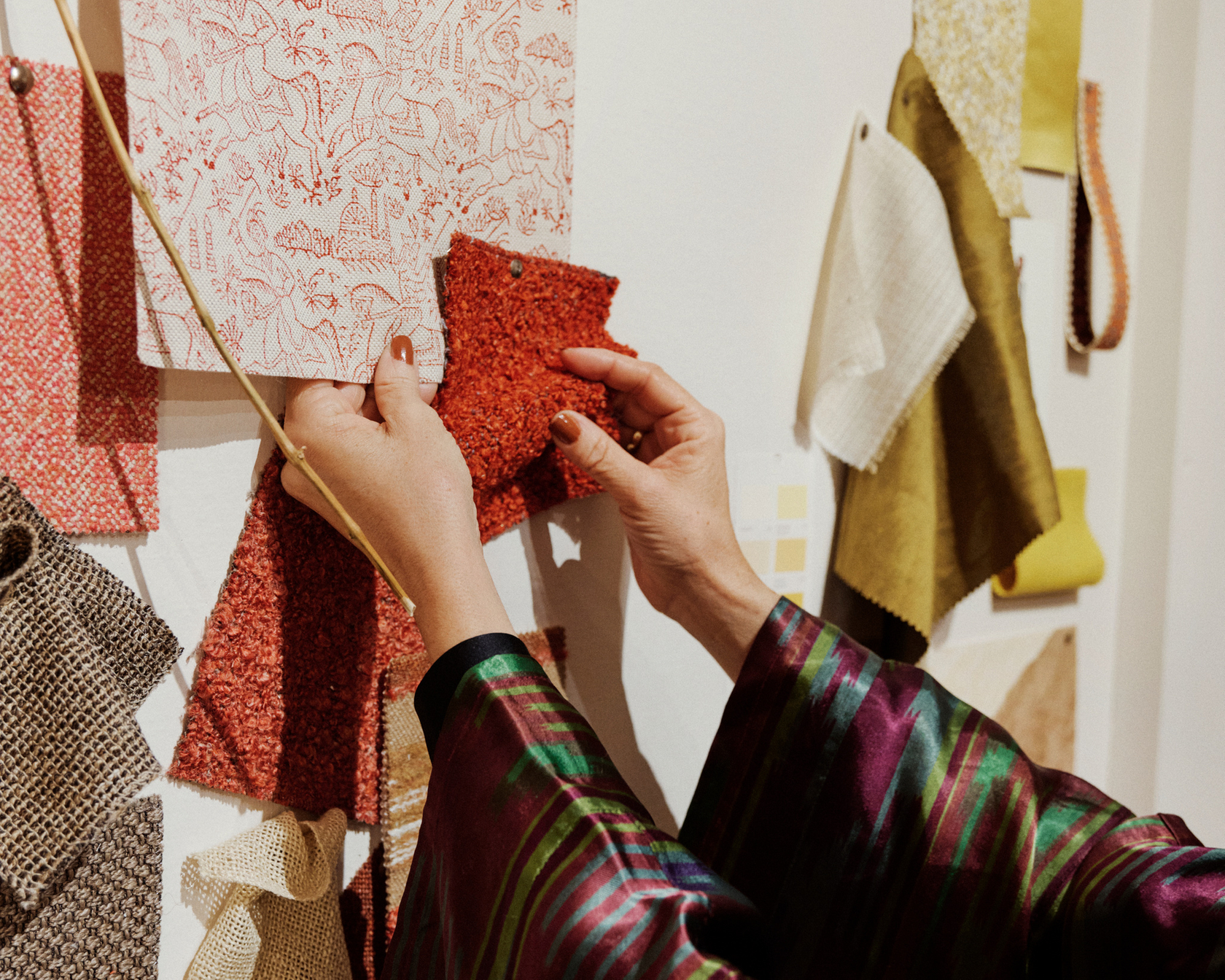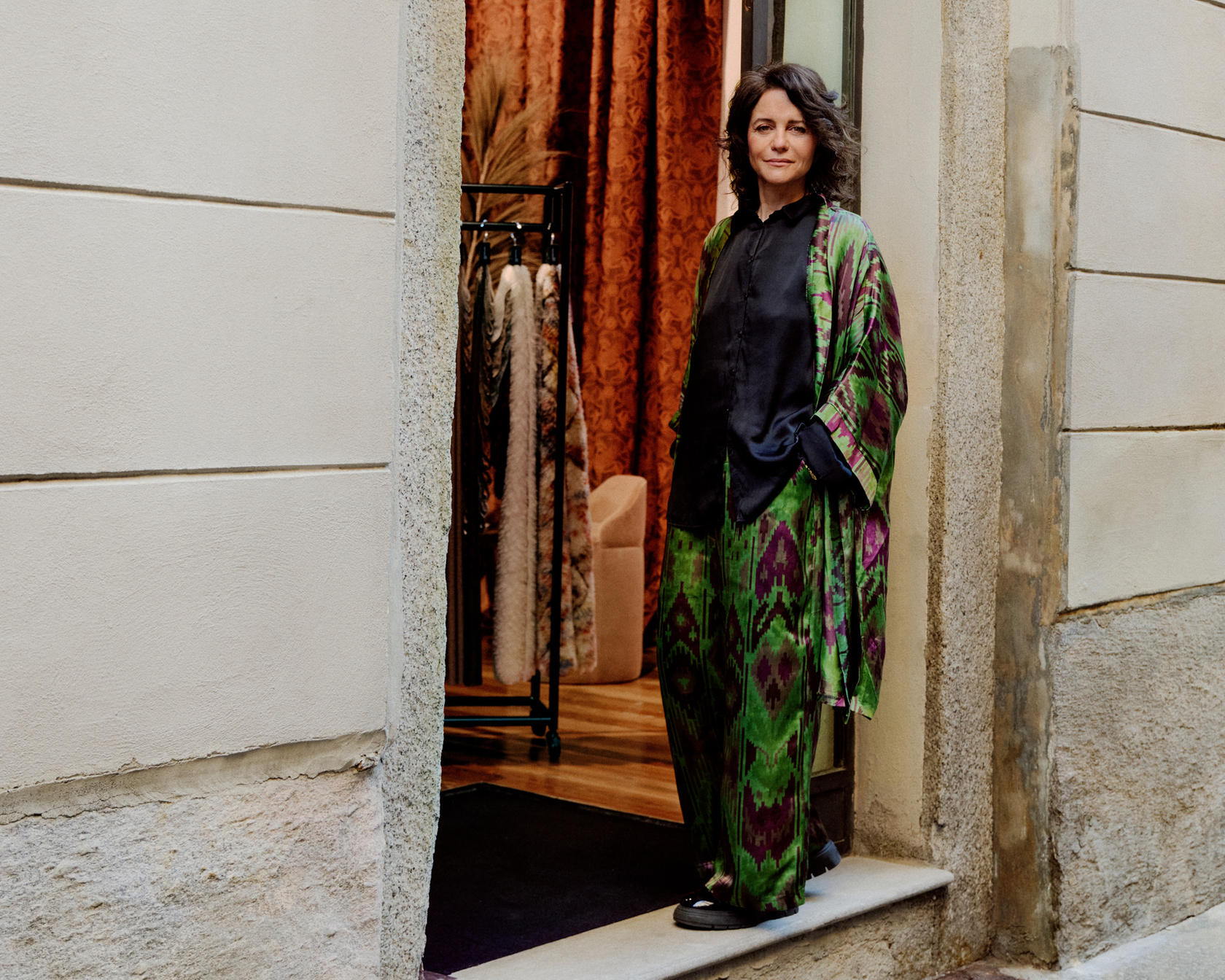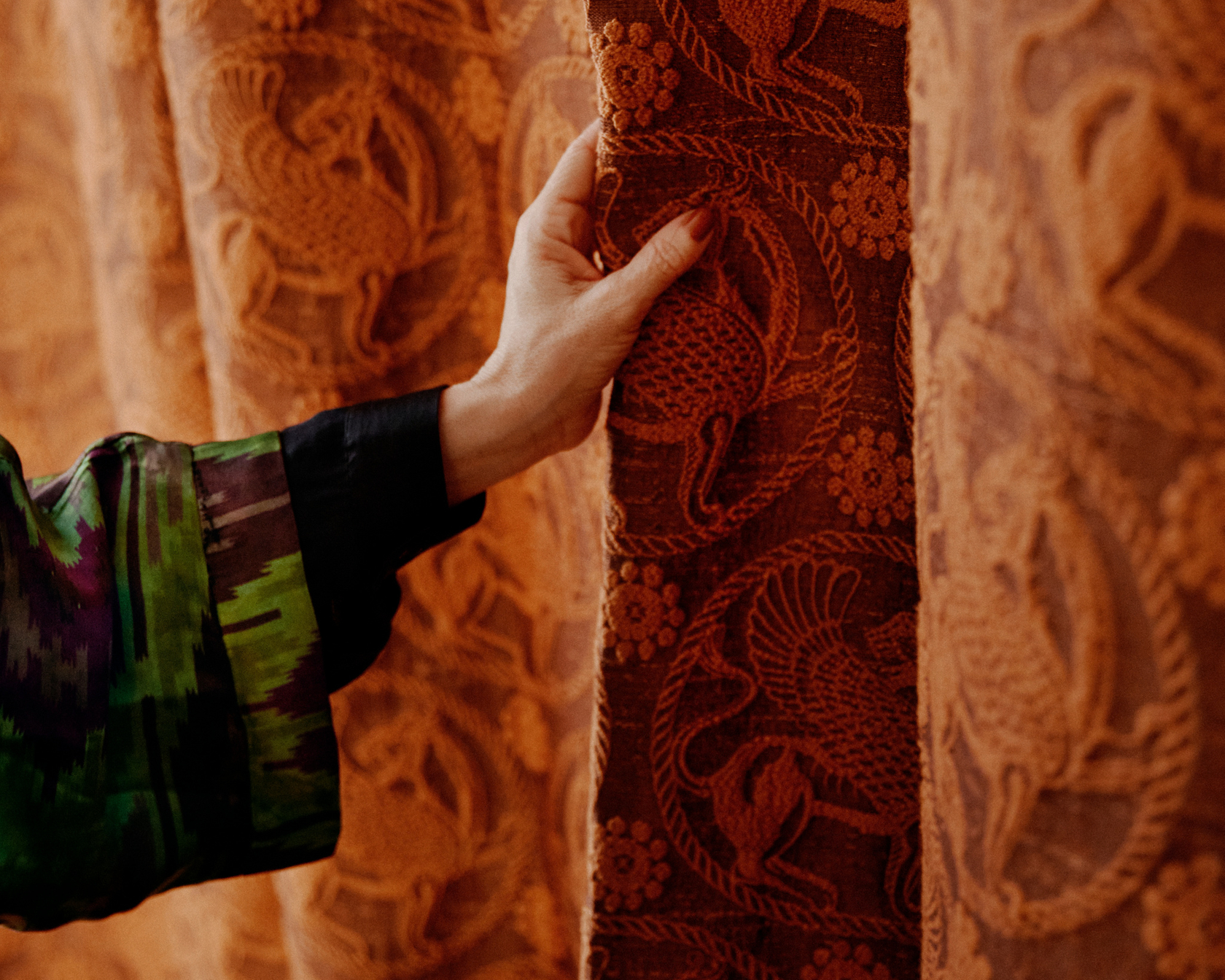
How would you describe the current chapter of Fischbacher 1819, shaped under your creative direction and Michael Fischbacher’s leadership as CEO?
I would say we are in a phase of conscious evolution, in which Michael and I have been focusing on clarifying who we are today. We started working for the company in 1997, then lived in the US and Japan for seven years. When we came back, we started thinking about how to modernise the brand without losing its depth. We wanted it to be relevant and alive, not frozen in time.
What do you see as the most significant evolutions Fischbacher 1819 has undergone since 2008?
When we began to lead the company, Christian Fischbacher was about heritage, all curly and flowery. I set out to change it completely, starting from the visual language. So, the first photo shoot I did to launch our Benu recycled fabric took place inside an abandoned warehouse, rather than the usual luxury home. This caused a lot of drama at the time – we ended up creating a different website to present the collection – but funnily enough, seventeen years later that has become our calling card. It wasn’t an easy moment, but I trusted my gut. I would say that the company as it is today started then.
Benu is an innovative fabric made from recycled PET bottles and industrial textile waste. Introducing it into the catalogue was another bold move for a heritage company, and you’ve already mentioned that the new visual language caused quite a stir. How was Benu received initially, and how is it seen today?
I was taken aside during a board meeting and told I didn’t understand the company, that Christian Fischbacher was an elegant house and nobody wanted my recycled rubbish. It was pretty rough, but it made me very determined: that reaction meant I really was onto something! The people that were happy with the shift are still great champions of the direction we took: it’s very important for a company to focus on a shared direction.
The importance of the team. Can you tell us more about that, and how collaboration shapes the way collections come to life?
As for my immediate team, the designers, I’ve had the same people since I started. At the beginning they too were not happy at all with the Benu recycled textile, but I remember having this pivotal conversation, in which I said that our challenge, as designers, was not just to figure out nice colours, but to do what Apple did with the IBM computer. That was a turning point, after which they all came on board. Today we are a group of people working between St. Gallen, in Switzerland, and Como, Italy, where we have our facilities. We work side by side: I think a group is always more intelligent than any one individual.