We live in an era of rapid change. At the same time, we feel threatened by multiple crises. What role can designers play in today’s overwhelming world?
Designers are not gods. We can not save the world or even change the world for the better. However, working alongside other experts, we can creatively translate analysis and decisions into practice. We naturally have a certain authority in this process, which gives us a strong voice. In a world of complex problems, we must be the ones to uphold principles. There are no clear-cut solutions, but we can try to steer things in the right direction.
Speaking of principles, what would be principles of responsible design you apply?
Responsibility is the right term. I think responsibility starts with questioning any project, asking ourselves, “Do we need this?” The key principle is to be as efficient and smart as possible with resources, including materials, energy and human resources. That sounds kind of obvious. However, enforcing these principles throughout the design process is not always easy due to the complexity of specific projects. We must consider many factors and compromise is inevitable. Evaluating these compromises and finding the right balance has become part of our job.
Since the founding of your studio, how has your perspective on the role of a designer evolved?
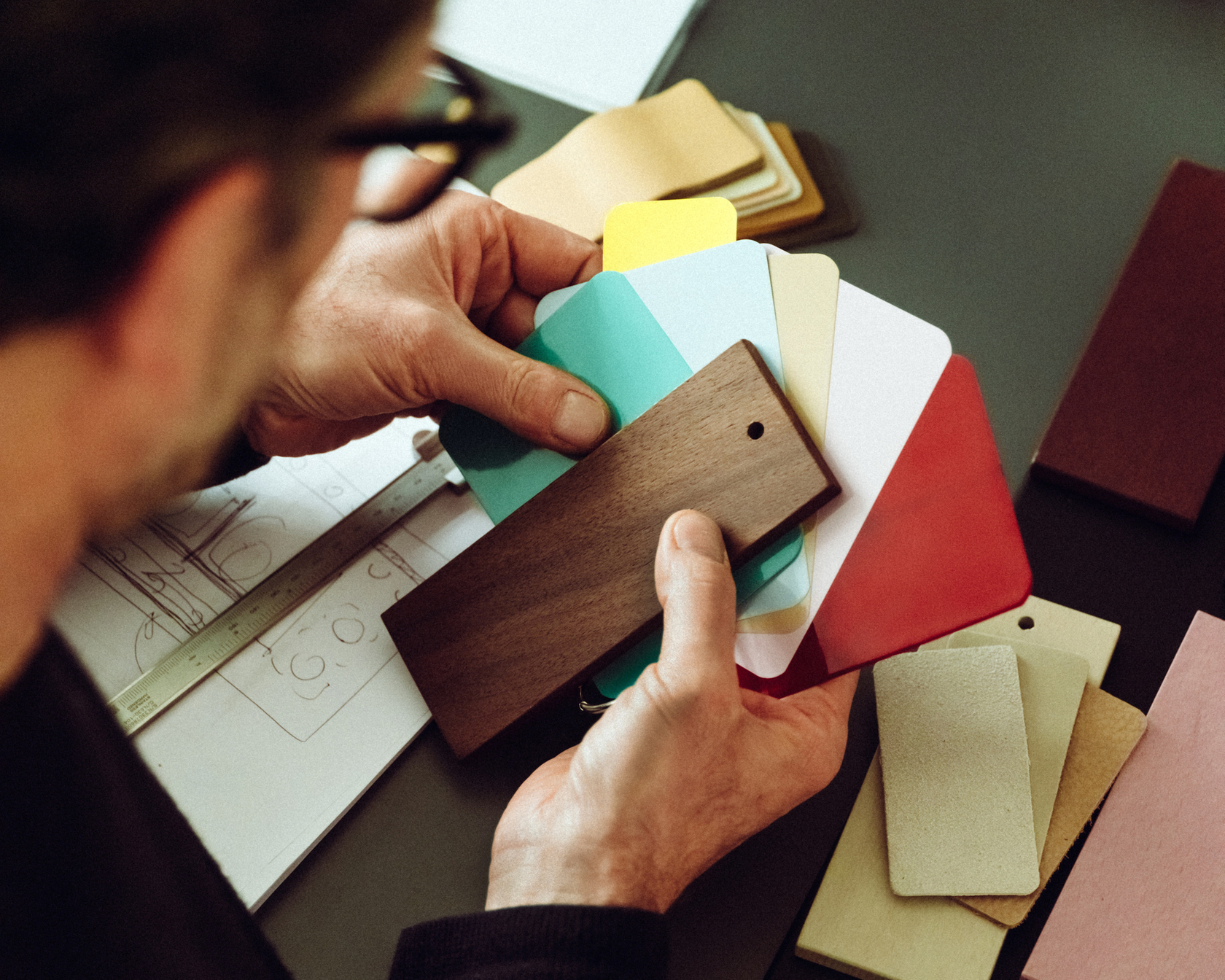
What has happened in the last 35 years is more than just evolution. The transition from analogue drawing to digital modelling has made data an interface. I can now share my data not only with companies or engineers, but also directly with manufacturing. As designers we have been empowered, but the expectations are extremely high: we are responsible for coming up with a strategy, a concept, the design, the engineering data, the visualisation and communication. And while we enjoy the privilege of these powers, we lose serendipity. I see a real danger of losing this other side of creativity: the side that is neither efficient nor professional, but which allows for chance, intuition and poetry. All the intangibles. The slowness of certain processes helped us to think outside the box and make discoveries along the way. Let’s take model-making as an example: now we simply send data from our computer to a 3D printer, and then three hours later, we have the model and we’re happy. I remember when we used to build models by hand – it took about three hours. During that time something would happen. A kind of friction and feedback between my mind and hands and I’d find myself thinking, “This feels more complicated than I thought. Let’s do it differently.”