


Where is the house and what are its defining characteristics?
Our house is in Humlebæk, a town near Copenhagen known for the Louisiana Museum of Modern Art. Before moving here, we lived in Copenhagen, and we were hesitant to leave the city because we really value its diversity and quality of life. The nice thing about Humlebæk is that, partly because of the museum, you find a very diverse mix of people from all over the world. And there are also good bakeries and cafés. It’s low-key, but with a creative touch. The house has access to a private piece of land by the sea that we share with our neighbours, so the location was really attractive. Anyway, it wasn’t easy to say yes to this house. It had been renovated in 2016, which wasn’t that long ago, but there were so many choices that didn’t work for us. Also, the layout presented some challenges, especially in the day area.
How did you approach the space, and how did the kitchen come to play such a central role in the project?
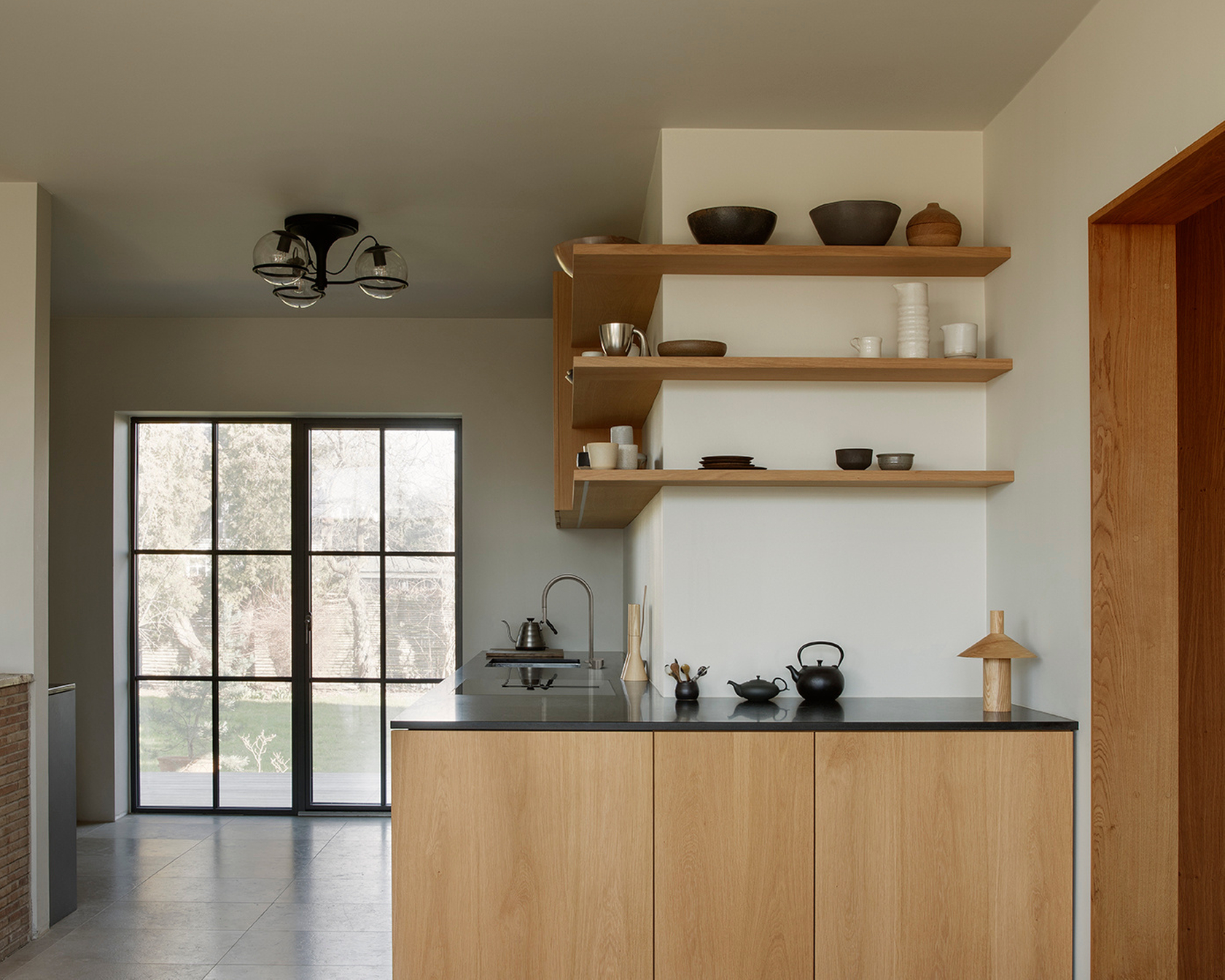
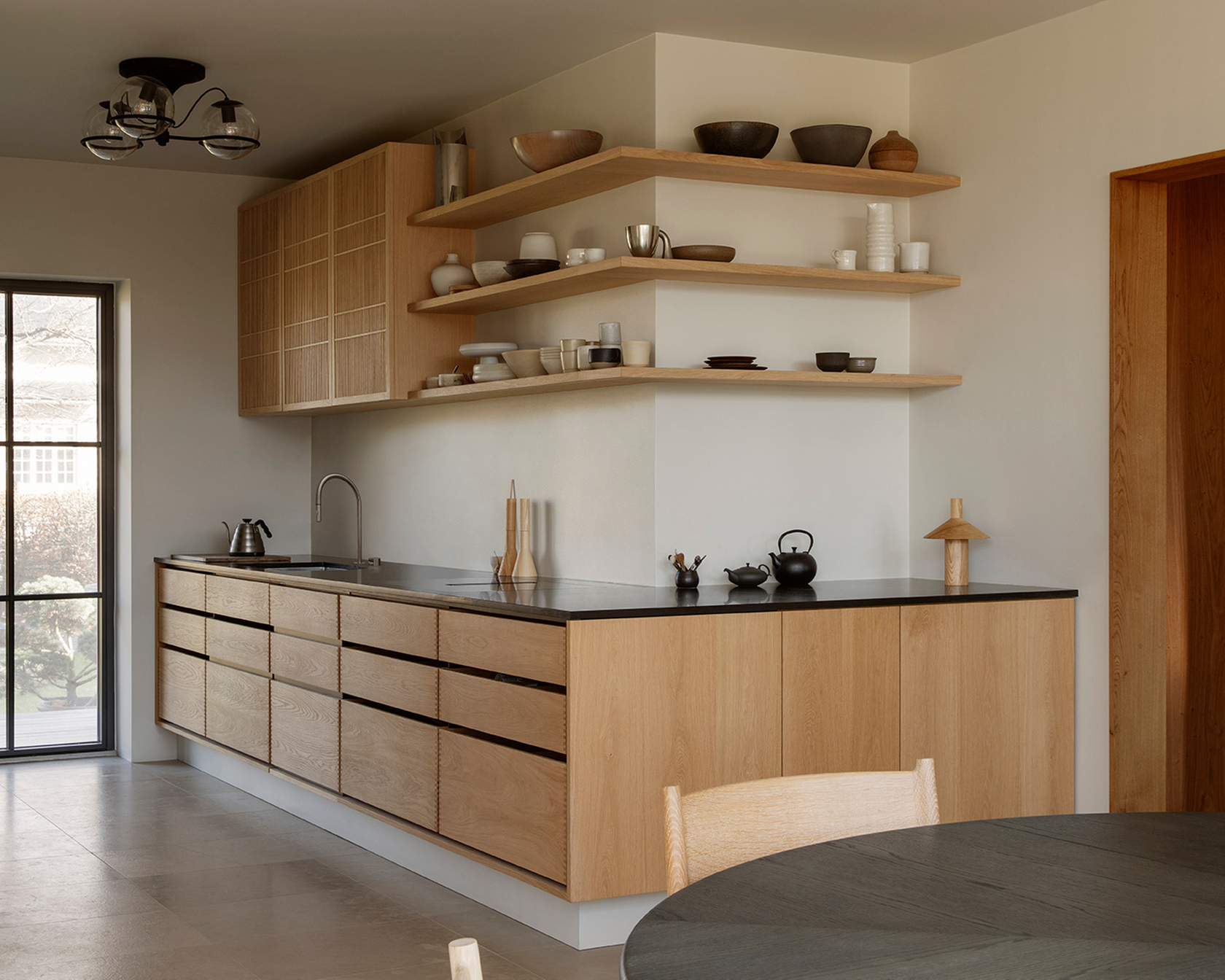
The difficulty was that, although the house is a decent size, the kitchen was really small. For our family, the kitchen has an important role because it’s where we spend most of our time. When friends come over, it’s also usually for something connected to a meal. There was a fireplace in the middle of the space, something you would normally expect to find in the living room. And there was also this strange angle, with a door and some steps leading into a back room. The big change was taking down a wall and designing the kitchen around what remained, which is why the shelving wraps around this angle. That allowed us to have an L-shaped kitchen with shelving on one side and additional storage on the entrance side, which already made the kitchen feel much bigger. Also, we now have an open layout, where kitchen and dining room are in the same room.
You developed the kitchen together with Garde Hvalsøe: why did you choose them as your partner?
Because I know what they stand for and how they work. They produce here in Denmark and work with local and European sourced wood. I also know them personally, so there was already a relationship and an understanding of their approach.
Was the kitchen developed from one of Garde Hvalsøe’s existing designs, or conceived specifically for this house? How did the design evolve through your collaboration?
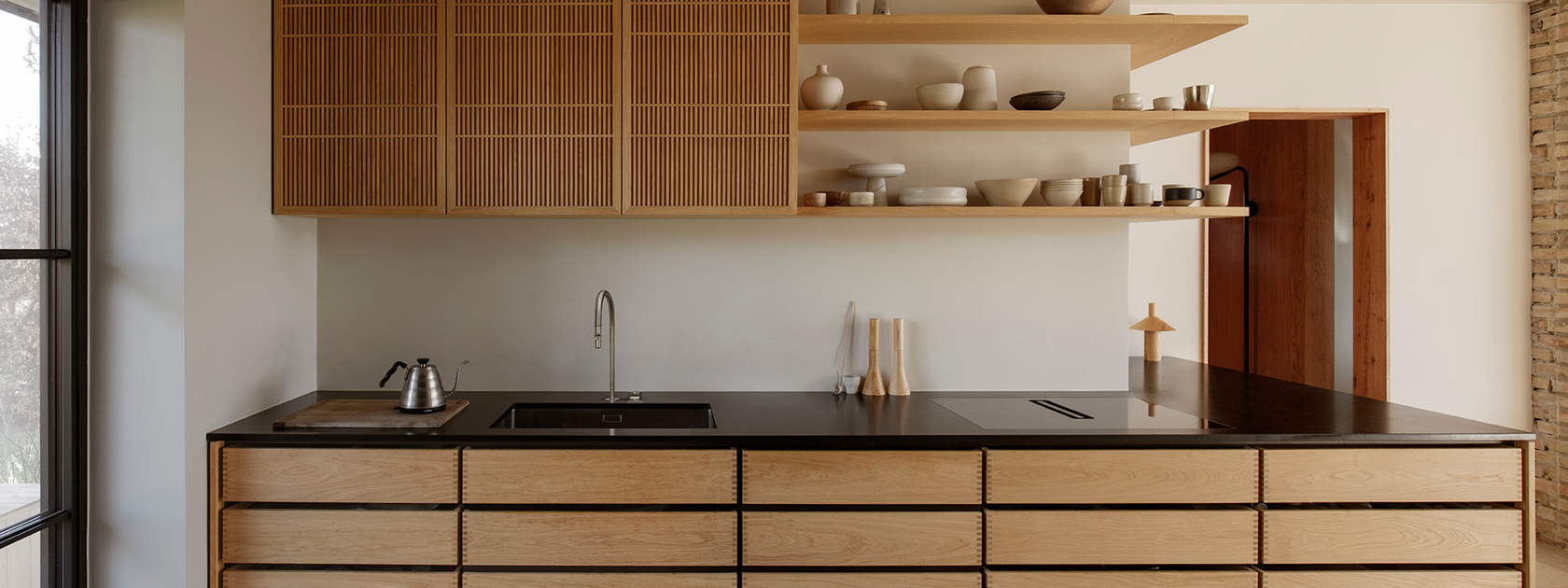
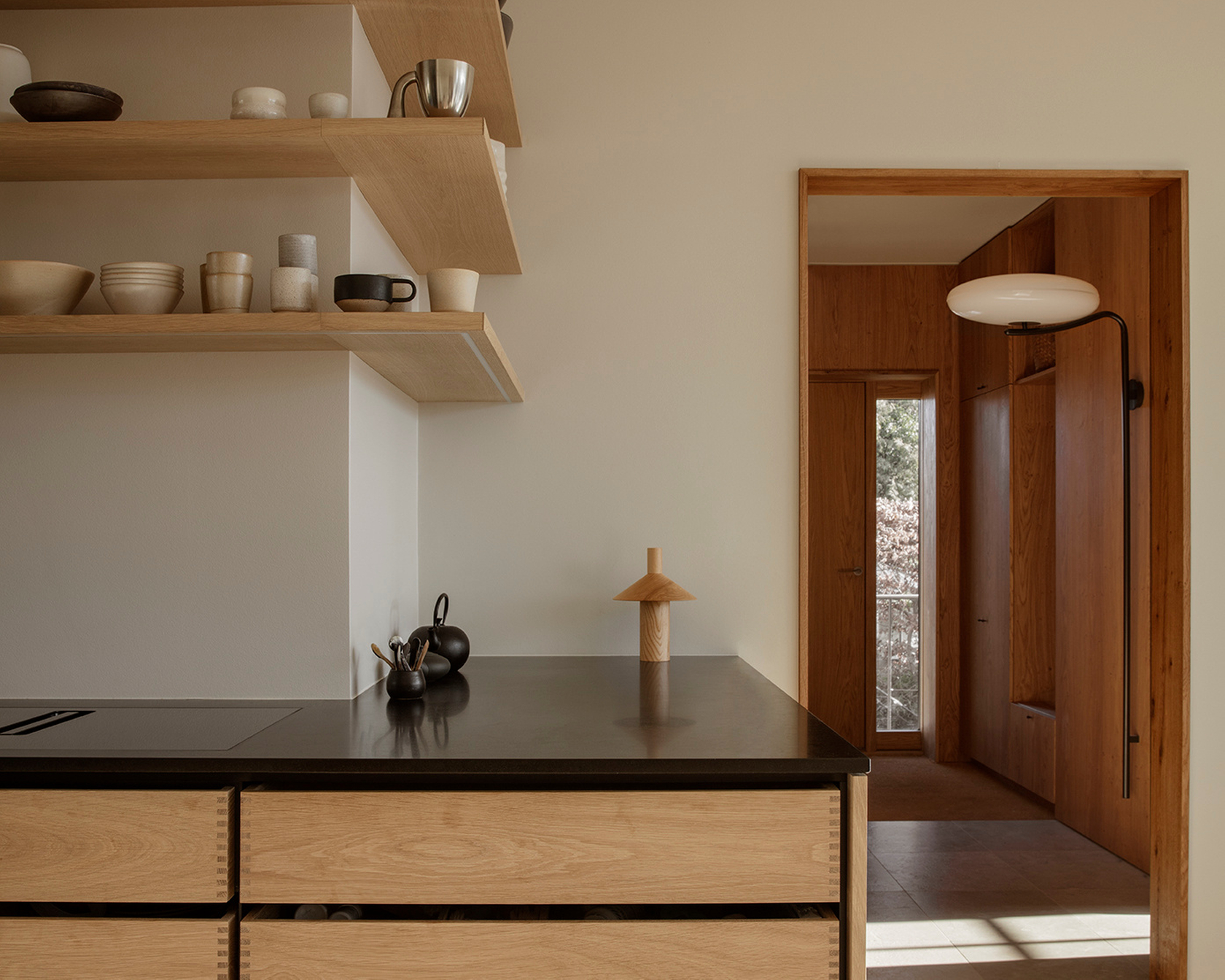
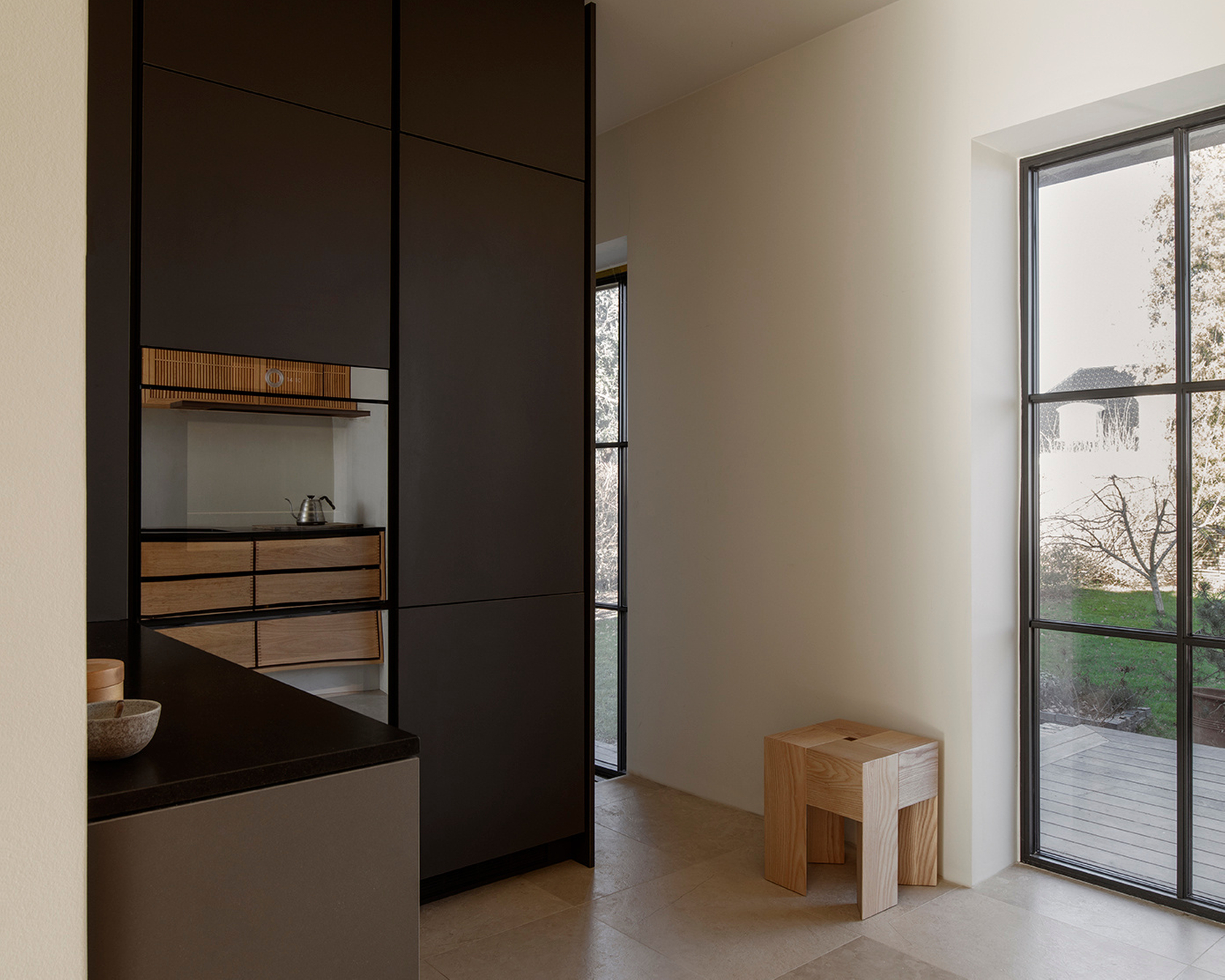
With Garde Hvalsøe, it’s never really a finished design. They have certain lines, and of course I chose from those, but then we adapted them to the house. One of the biggest questions was the upper cabinets. We asked the designers if they would be open to changing the design, and what we developed ended up becoming one of the main features of the kitchen. We also spent a lot of time on the corner unit. Originally, the tall cabinet there was going to be a standard cupboard, but I realised that, because it was so high and tucked into the corner, I needed to be able to pull its contents out towards me. So we worked together on a custom solution. I also wanted to make the worktop deeper, so that there would be some extra space at the back. These are the kinds of things you might not notice immediately, but we spent a lot of time getting them right. There are many details in this kitchen that we worked on very carefully.
What led you to choose V-ZUG appliances, and what were you looking for from them both functionally and aesthetically?
I had never used V-ZUG in a project before, but I looked into the brand and understood that the quality was very high. I ended up choosing a black cooktop because I like the way it can disappear into the stone. I really like that seamlessness. I’m also very happy with the dishwasher, especially the fact that you can raise the lower basket. When I have guests and we clean up the kitchen together, they’re always amazed by it. The oven is so easy to use, too. I just open the flap, take out the water container, fill it and put it back. And you can take the middle piece out and simply put it in the dishwasher. These are the kinds of things that make everyday life easier.
Are there particular functions or cooking rituals linked to the appliances that have become part of your everyday life in the house?
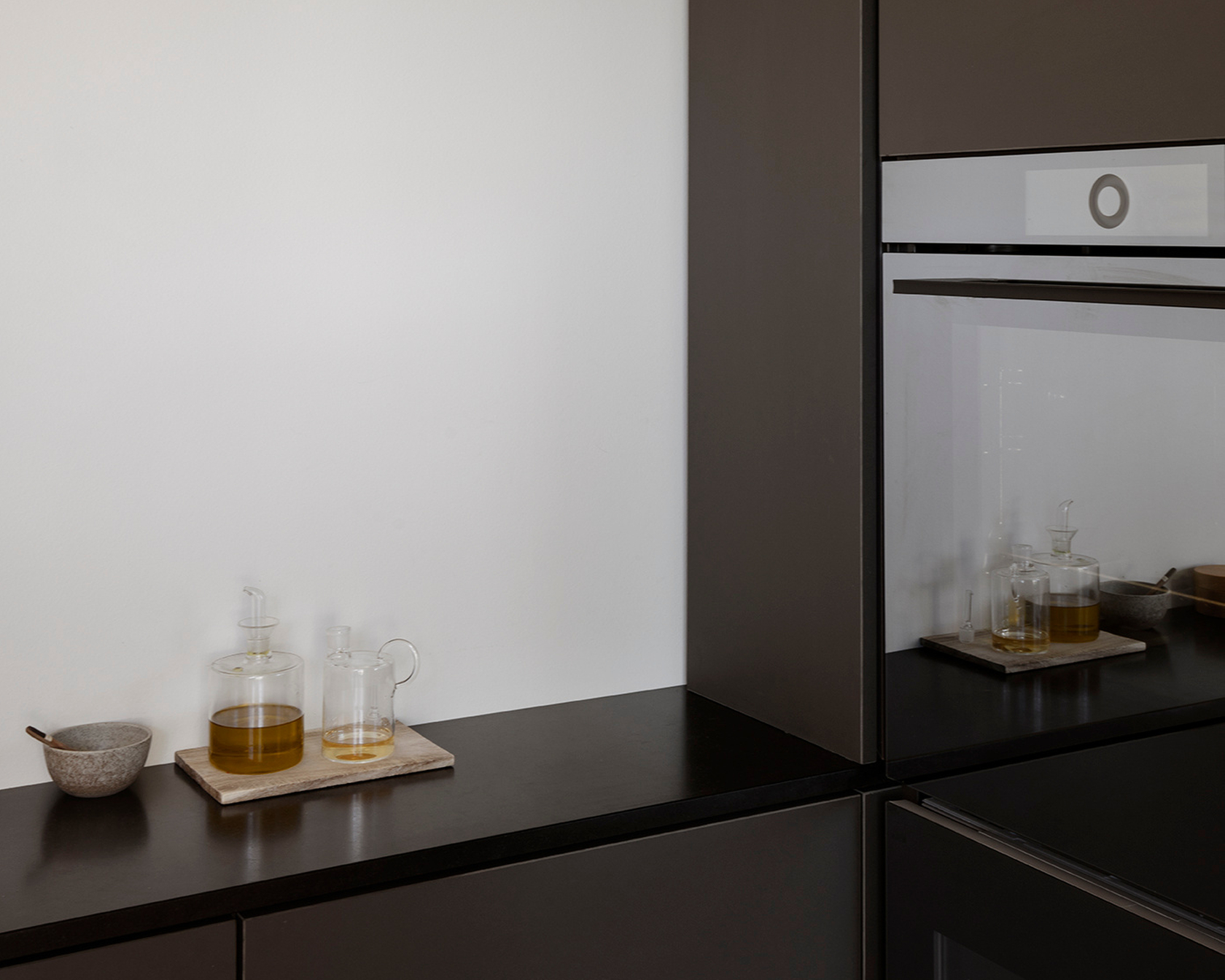
We love listening to music when we cook. And my teenage boys always sing in front of the mirrored surface of the oven, because it really is like a mirror. It’s fun!
From your experience as a designer, what are the most important things to consider when planning a new kitchen?
First of all, it matters what kind of kitchen you’re planning: whether it’s a space where you spend a lot of time, whether you like to host, and how you want the kitchen to relate to the rest of the home. You might decide to separate the kitchen from the dining room, for example, or opt for an open-plan space. Then it’s about finding the right balance between something practical and something beautiful.